Delightful modern japanese restaurant in Honolulu. We should have made reservations, however stopped here on a whim to check it out. You can park in the Whole Foods parking garage. Staff was welcoming, attentive, and courteous. Ordered sushi to see how fresh and how well they prepared the food. It was refreshingly light and presented well. The salmon belly was also cooked to perfection. We tried to eat quickly because there were other reservations behind us. Portions were quite large. Recommend for a special occasion, an ordinary date night, or if you are craving quality japanese food in Honolulu.
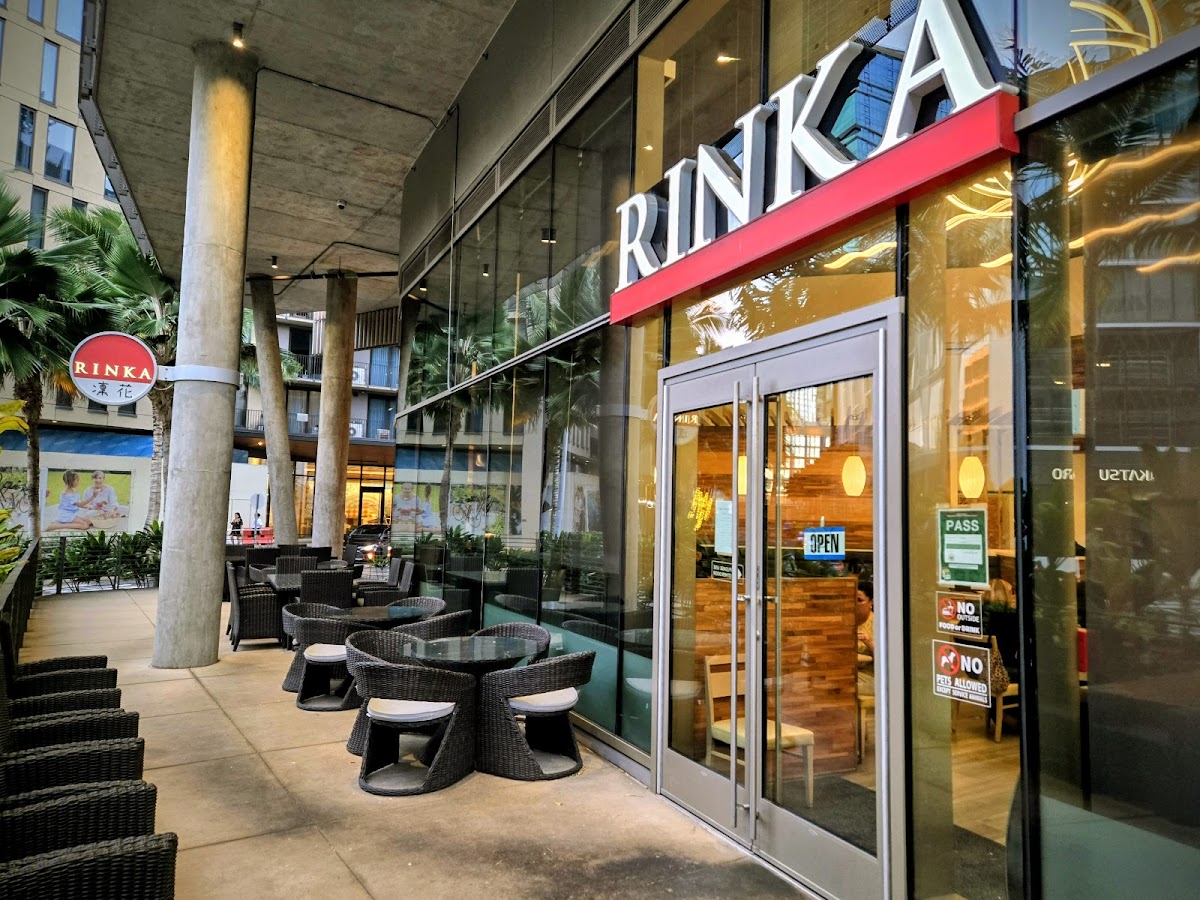
Overview
The first time I walked into Rinka, tucked into 1001 Queen St #105, Honolulu, HI 96814, United States, the smell of binchotan charcoal hit before I even sat down. It reminded me of late nights in Tokyo where chefs work inches from glowing coals, turning simple skewers into something memorable. That sense of craft carries through the entire space, from the open grill to the casual hum of conversation that makes lingering over dinner feel natural rather than planned.
I’ve eaten here with friends after work and also slipped in solo to sit at the counter, and both experiences felt equally welcome. The menu leans heavily into Japanese comfort food with depth-robata-grilled meats, seafood, and vegetables that show how much technique matters. One of the cooks once explained how controlling the heat of charcoal allows fat to render slowly while sealing in moisture, which is why dishes like charcoal-grilled yakitori arrive juicy instead of dry. That method isn’t just tradition; food science backs it up. According to culinary research cited by the USDA, high-heat grilling can preserve flavor compounds when timing and temperature are controlled carefully.
The seafood selections reflect Hawaii’s access to fresh fish, but also a disciplined approach to sourcing. I’ve watched the kitchen break down fish for sashimi with precise, clean cuts. Organizations like the Monterey Bay Aquarium’s Seafood Watch consistently note that freshness and handling are critical for both taste and safety, and it shows here. The texture of the sashimi and the clarity of flavor suggest fish that hasn’t traveled far or sat too long. Still, availability can change, and the staff is upfront about that, which builds trust rather than disappointment.
Beyond the grill, the menu includes small plates designed for sharing, which makes ordering feel like a collaborative process. On one visit, our server suggested pairing a light salad with a richer meat dish, explaining how acidity helps balance umami. That kind of guidance reflects real expertise rather than rehearsed lines. It’s the same philosophy taught in Japanese culinary schools, where balance is considered just as important as seasoning. The Japanese Culinary Academy often emphasizes harmony of flavors, and that principle quietly guides many of the plates here.
What stands out in reviews from locals is consistency. Scrolling through recent reviews before my first visit, I noticed repeated mentions of attentive service and reliable quality. After multiple meals, I understand why. Even on busy nights, dishes arrive with the same care. That consistency matters, especially in a dining scene as competitive as Honolulu’s. The Michelin Guide, which expanded its coverage in Hawaii, often highlights consistency as a key marker of a restaurant worth revisiting, and this place fits that idea well.
The location makes it easy to drop in, whether you’re coming from nearby offices or exploring the neighborhood. Parking can be limited during peak hours, which is worth noting, but once inside, the relaxed atmosphere makes the minor hassle fade quickly. Prices sit comfortably in the mid-range for the area, reflecting quality ingredients and skilled preparation without tipping into special-occasion-only territory.
What I appreciate most is how the experience feels grounded. There’s no attempt to over-explain or oversell. The staff answers questions honestly, and if an item is sold out, they suggest alternatives that make sense. That transparency is refreshing and aligns with what diners increasingly value, according to consumer trust studies from organizations like Pew Research Center, which consistently show that openness builds long-term loyalty.
Eating here feels less like chasing trends and more like returning to a place that understands its craft, respects its ingredients, and knows its audience.
Good to know
Service options
✓ Outdoor seating ✓ Delivery ✓ Takeaway ✓ Dine-inHighlights
✓ Fast servicePopular for
✓ Lunch ✓ Dinner ✓ Solo diningAccessibility
✓ Wheelchair-accessible car park ✓ Wheelchair-accessible entrance ✓ Wheelchair-accessible seating ✓ Wheelchair-accessible toiletOfferings
✓ Alcohol ✓ Beer ✓ Healthy options ✓ Small plates ✓ Spirits ✓ WineDining options
✓ Lunch ✓ Dinner ✓ Dessert ✓ Seating ✓ Table serviceAmenities
✓ ToiletAtmosphere
✓ Casual ✓ Cosy ✓ TrendyCrowd
✓ Groups ✓ Locals ✓ TouristsPlanning
✓ Dinner reservations recommended ✓ Accepts reservationsPayments
✓ Credit cards ✓ Debit cardsChildren
✓ Good for kids ✓ High chairsParking
✓ Free multi-storey car park ✓ Free parking lot ✓ ParkingPhotos
1 / 4
Location
Reviews
- No ratings yet 300 reviews
Birthday lunch. Reservation of 5+ only seemed available over phone and not on resy. They have bar, indoor and outdoor seating. The menu online is the same in person. The table collectively fills out a paper with the side dishes to be brought out (these are premade chilled/room temp usually). The sets come out on a tray that takes up the whole table. We really enjoyed the matcha salt with the tempura. The chawanmushi was very silky. The sushi rice was room temp and very subtle.
Had a day trip to Oahu and wanted to try out Rinka after seeing a local foodie influencer mention that their lunch sets were pretty affordable. I don’t recall which lunch set I got (probably the nigiri one) since their online menu is from last year and may not have their updated sets. Atmosphere wise it was a bright open if not a little crowded dining room. I opted to sit at the counter since the only other option was outside but there was construction going on nearby. Went to the very end of the counter which I don’t mind since it lets me keep to myself but the view probably isn’t the best as seen in the photo. The sashimi was all pretty fresh tasting with no off putting smells. I do have to rave about the ikura one. The salmon roe was really clean, each egg popping like a ball of sea water in the best way. It didn’t taste frozen or slimy or old. The udon was nice and firm. Tempura was also delicious and added that nice crunchy texture amid all the soft nigiri and udon. Would definitely go again to try more of the lunch sets.
This spot is a total sleeper hit — incredible quality Japanese food at great prices. Their lunch menu is straight-up FIRE! With how busy it’s gotten, I highly recommend making a reservation beforehand. We actually got turned away once because of the crowd! Food: 5/5 Top Picks you can’t go wrong with: - Seafood Jewelry Box Set (海鮮宝石箱御膳) - Grilled Unagi Eel Set (うなぎ蒲焼き定食) - Seafood Chirashi Set (海鮮ちらし御膳) Each set comes with udon (うどん), chawanmushi (茶碗蒸し), and your choice of two small sides (小鉢二品). Absolute value and quality! Ambience: 4/5 Plenty of indoor and outdoor seating, plus bar spots for solo diners. Bathrooms are small single stalls, but there are enough of them so there’s no wait. Bonus: a private room in the back for gatherings or small parties. Service: 4/5 Consistently attentive and friendly over the years — zero issues every visit. Parking: 4/5 Usually plenty of space in the old Dave & Buster’s parking lot just a short walk away.
UPDATE: They improved service since last time, so I'm updating my review. Service: The staff seem like they got good training. Food: Good quality and presentation. Price: $50-$70 per person. Facility: Some bench seats are worn and cracking.
The food tasted just like the dishes I had in Japan. It was such an enjoyable experience. The staff were very friendly, and overall it was a very satisfying dining experience.
Really nice dinner here last night. I tried the spicy salmon sushi roll as well as the delux nigiri platter. Everything was DELICIOUS The sparkling sake was also good. Would definitely recommend.
Absolutely incredible Japanese restaurant in downtown Honolulu. I had the Karaage and Udon and was beyond impressed. We had a party of four and spent $154 before tip. We mostly ate from the A La Carte menu. Two of us had deserts.